Article in Peer Reviewed Journal by Eloisa Martin
Current Sociology, 2022
When I was appointed Current Sociology's editor, I was very aware-because I was told-of the leap ... more When I was appointed Current Sociology's editor, I was very aware-because I was told-of the leap of faith that the Publication Committee had taken when choosing that 'young Brazilian woman'. When my nomination was sent to the ISA Executive Committee for approval, not even the Brazilian members knew anything about me, as they told me, laughing, later on: 'we had to Google you'. Indeed, while an Assistant Professor at University of Brasilia at that time, my PhD in Anthropology and my ethnographic work on religion had made me transit spaces where not many Brazilian sociologists are regulars. And, of course, I am Latin American, but not Brazilian, so I was hard to identify.
This article discuss my period as Current Sociology editor (2010-2017) as a platform for challenging inequality in knowledge production -and a space to take risks.
Revista Mana, 2021
A convite de Mana, às vésperas de seu aniversário de 80 anos, completados em 2021, cinco pessoas ... more A convite de Mana, às vésperas de seu aniversário de 80 anos, completados em 2021, cinco pessoas entrevistaram
Otávio. Amir Geiger, Emerson Giumbelli, Eloísa Martín, Regina Novaes e
Ypuan Garcia foram, em diferentes momentos, alunos e alunas em cursos
q u e O t á v i o c o n d u z i u n o M u s e u Nacional. Este é também um grupo de ex-orientandos(as), ex-alunos(as), amigos(as) e companheiros(as) de militância. Realizada em 27 de setembro de 2021, a entrevista publicada a seguir serviu como um (re)encontro entre pessoas que tiveram sua formação marcada pelos trabalhos de Otávio.
Representa uma homenagem às suas obra e trajetória, tão longevas quanto impactantes.
A dinâmica, tal como inicialmente concebida, consistiu em formular por
escrito perguntas para Otávio, de maneira que ele já as conhecesse por
ocasião da entrevista. Contudo, num autêntico “drible de corpo”, ele preferiu afinal não as receber previamente, deixando para ouvi-las e responder de improviso no encontro síncrono virtual. Por isso, como os(as) leitores(as) perceberão, algumas perguntas (aquelas formuladas com antecedência) possuem elaboração ou tom mais formal, menos improvisado, às vezes contrastando com a coloquialidade ágil, incisiva e generosa das respostas de Otávio . Explorando diferentes aspectos de sua relação com a antropologia, a entrevista mostra quão instigantes e oportunas continuam sendo suas visões e posições.
The Sociological Review, 2021
In this introduction, we have asked a very classical sociological question and brought together i... more In this introduction, we have asked a very classical sociological question and brought together interdisciplinary efforts to critically approach it, focusing on a basic issue: food. We briefly reconstruct the main approaches to social change in sociological theory and then identify main themes with which food studies have contributed to this debate. If, to avoid normative and formal approaches, theories of change require contextualization in order to keep their explanatory value, this volume brings historical and geographical context to provide an analysis of social change through the lenses of food. Methodologically, articles offer diverse approaches to food, allowing different kinds of perspectives on change. While statistical analysis or historically comparative sociology will provide correlational snapshots and structural transformations, ethnographies necessarily deal with change happening in the everyday. The articles in this monograph have been organized into four broad groups: (1) national cuisines as elite projects of social change; (2) science and technology as contested tools for social change; (3) social mobilization and food movements as agents of social change; and (4) micro- and macro-level change and beyond: culinary subjectivities, embodied social change and food transition.
The Sociological Review , 2021
This article aims to analyse how the invention of a national cuisine in the United Arab Emirates ... more This article aims to analyse how the invention of a national cuisine in the United Arab Emirates takes part in the journey of building the nation, both as a metaphor and as performance of larger political and ideological processes. It analyses the discourses of chefs and professional cooks that are or have been tagged as Emirati food experts. In the Emirati nation building process, the construction of identity is not ‘defined by the other’ against which the image of a common ‘us’ should be reflected. This is also mirrored in the national cuisine in the making, which is developing mostly endogamously. Emirati food both participates in and tells the story of nation building in the UAE, through three overlapping stages of development: traditional, modern and fusion food, which correspond to different moments of the perceived nation development and its fit within Western definitions of both national-states and modernity. Emirati food also helps to create identity borders, by defining who is allowed to taste the authentic flavours, through practices of commensality, and who is able to replicate them in restaurants. This article highlights the connections between nation building, social transformation and food, and explores the ways in which constructions of Emirati cuisine reflect discourses and practices of national belonging.
---> Find research related pictures on Instagram @EmiratiFoodStudies
Revsión crítica sobre los estudios académicos sobre religión en América Latina
Sociedade e Estado, 2018
Com uma linguagem simples e accessível, se apresentam as principais características da escrita ci... more Com uma linguagem simples e accessível, se apresentam as principais características da escrita científica e se oferecem conselhos práticos para ler, escrever e publicar no campo acadêmico.
How to write a good article
Current Sociology, 2014
OPEN AND FREE ACCESS See the link below.
This article presents the main challenges of academic w... more OPEN AND FREE ACCESS See the link below.
This article presents the main challenges of academic writing and publication in scientific journals. It reveals some of the most common mistakes in the process of manuscript submission and review, and offers some possible solutions.
Keywords: Academic journal, academic writing, internationalization, relevance
http://csi.sagepub.com/content/62/7/949.short
Social Compass, 2009
The concept of “popular religion” is among the most frequent to arise in debateson religion in so... more The concept of “popular religion” is among the most frequent to arise in debateson religion in social science. Nevertheless, there is often disagreement on the scope of this concept and its definition, which are the result of an implicit and indiscriminate notion of religion. The author identifies three main groupsof works that describe and apply different definitions of popular religion. The first, clearly identified with a Catholic matrix, considers popular religion asthe religion of the “people”. The second focuses on the “functions” that pop-ular religion fulfils among the poorest sectors of the population, as a way of dealing with deprivation. The third group suggests the existence of a “different logic” to analyse religious events. Basing herself on the main literature produced in Latin America on the subject, the author proposes a way round the problemsraised by coining and discussing the concept of “practices of sacralization”.
Key words: popular religion; Latin America; Catholicism; sacred
Current Sociology, 2017
Free Access article.
Current Sociology was founded in 1952 and since then has developed into an ... more Free Access article.
Current Sociology was founded in 1952 and since then has developed into an internationalized and pluralistic journal while always pursuing its mission of sharing sociological works across the globe. Over the past 65 years, Current Sociology has played a major role in both discussions surrounding the field of production of sociological knowledge and debates on its limits and challenges. And at the same time, it has drawn up strategies to overcome these limits and challenges. Meeting these goals has been puzzling at times because within the global academic community, the very production of knowledge entails inequalities derived from a specific geopolitics inherent to the international division of academic work. This article analyses some of the main editorial policies developed over the past seven years in an attempt to face the challenges of inequality in academia and carve out spaces of intelligibility.
Transcultural Music Review, 2008
Resumen El presente artículo presenta y contextualiza los nuevos usos de una categoría social, la... more Resumen El presente artículo presenta y contextualiza los nuevos usos de una categoría social, la de pibe--una categoría que en su uso actual es transversal a las divisiones generacionales entre infancia, juventud y adultez--a partir de su lugar en la cumbia villera. En la primera ...
Religião e Sociedade
This article aims to show how people, who identify themselves as Gilda fans, through different pr... more This article aims to show how people, who identify themselves as Gilda fans, through different practices, cooperate in the deceased singer consecration process. Taking into account the emic differentiation between fan and devotee, we shall see how Gilda is inscribed into a differential texture within the dwelling-world, that we can call sacred, from performances that are not easily identify as belonging to the religious sphere. Instead to considering fans’ practices as religious metaphors, we consider them as different ways of Gilda consecration.
Keywords: Popular religion, sacred, fandom, consecration practices, Argentina.
Book chapter by Eloisa Martin
The Oxford Handbook of the Sociology of Latin America, 2021
is chapter proposes that a way out of the impasse created by the prevalent, con- stricting de ni... more is chapter proposes that a way out of the impasse created by the prevalent, con- stricting de nitions of popular religion is possible if we focus on the second term of the concept: that is, on the way religion is de ned. Following (Asad, 1993, p. 29), if religion is a product of a historical discursive process, we need to de-universalize and desubstan- tialize it by looking to those practices designated as “religious” within speci c empirical places. We cannot, then, merely accept the modern notion of religion as an autonomous dominion with speci c functions and rules that is, by de nition, opposed to the “secu- lar.” is chapter o ers a new perspective by which to analyze the sacred beyond how it is treated in the de nition of popular religion.
Instead, o ered here is the concept of practices of sacralization: the many ways of con- structing the sacred, of inscribing people, places, and moments in a di erentiated texture of the inhabited world. By stating the need for a process-based approach, this perspective considers the sacred as a unique and consciously created texture of the inhabited world.

Preprint (no footnotes or references)
IN: HÄGER, Andreas (ed): Religion and Popular Music. Artis... more Preprint (no footnotes or references)
IN: HÄGER, Andreas (ed): Religion and Popular Music. Artists, Fans and Cultures. NY: Bloosmbury. 2018
Buy the book with discount at https://www.bloomsbury.com/uk/religion-and-popular-music-9781350003712/
Through in-depth case studies, Religion and Popular Music explores encounters between music, fans and religion. The book examines several popular music artists - including Bob Dylan, Prince and Katy Perry - and looks at the way religion comes into play in their work and personas. Genres explored by contributing authors include country, folk, rock, metal and Electronic Dance Music. Case studies in the book originate from a variety of geographic and cultural contexts, focusing on topics such as nationalism and hard rock in Russia, fan culture in Argentina, and punk and Islam in Indonesia.
Chapters engage with the central issue of how global music meets local audiences and practices, and considers how fans as well as religious groups react to the uses of religion in popular music. It also looks at how they make these interactions between popular music and religion components in their own identity, community and practice.
Tapping into a vital and lively topic of teaching, research and wider cultural interest, and employing diverse methodologies across musicians, fans and religious groups, this book is an important contribution to the growing field of religion and popular music studies.
Afe Adogame; Nick J. Watson; Andrew Parker. (Org.). Global Perspectives on Sports and Christianity, London: Routledge., 2017
In this chapter, I analyze a specific configuration of practices of the
sacred in which soccer b... more In this chapter, I analyze a specific configuration of practices of the
sacred in which soccer becomes a particularly pertinent matrix. Using an
ethnographic case study in Argentina, I show how gestures, practices and
meanings originating from soccer and more specifically, among soccer fans, are used to create and experience the sacred. This does not mean understanding soccer fandom as a lower form of religiosity, a pseudo-religion, or even a metaphor of the sacred, but as specific forms of practicing the sacred, that could also shift onto other areas of the sacred, including religious practices.
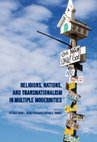
Possamai, A; Turner, B (eds) Religions, Nations and Transnationalism in Multiple Modernities. London: Palgrave MacMillan, 2017
The arrival of Jorge Bergoglio to the Holy See has introduced a number of changes in the relation... more The arrival of Jorge Bergoglio to the Holy See has introduced a number of changes in the relations between the Catholic Church and the State in Argentina. While traditionally these relations have been characterized by the preferential status of Catholicism as quasi-official religion and its active presence in the government's decisions, in the last decade it was a noticeable succession of conflicts between the Church and State. However, few days after the coronation of Pope Francisco, government discourse changed radically, emphasizing the importance of having " an Argentinean Pope. " The media and various forms of popular expression (graffiti, jokes, cartoons, montages on Facebook, etc.) express how unprecedented and unexpected this situation was, from a key that combines various representations of national culture. In this new picture, the traditional and conservative homology between Argentine national identity and Catholicism acquires new features, especially at the level of popular religion. In this work, I will observe a specific matrix that allows to relate to the sacred and the idea of nation: soccer. Soccer appears as one of the matrixes that model the relationships with the sacred: not as metalanguage, nor as religious metaphor, but anchored in the specific experiences and particular semantics and their influence on the imagination of the nation and of religion. Soccer, as a matrix, helps us to problematize hegemonic definitions of religion and national identity.
SEMAN, P & VILA, P (eds): Youth Identities and Argentine Popular Music. Beyond Tango. New York: Palgrave Macmillan, 2012
Pulished in SEMAN, P & VILA, P (eds): Youth Identities and Argentine Popular Music. Beyond Tango... more Pulished in SEMAN, P & VILA, P (eds): Youth Identities and Argentine Popular Music. Beyond Tango. New York: Palgrave Macmillan
Catholicism become the most widespread religion in Latin America.By the 1990s Latin America was r... more Catholicism become the most widespread religion in Latin America.By the 1990s Latin America was responsible for 42% of the world’s Catholic population. Despite their common Catholic identity,Latin Americans also have Amerindian, African, and popular non-Christian religious traditions inherited from Spain. Even today many Catholics incorporate practices and beliefs that are not accepted by the Church, including devotions to non canonized saints, some of them portrayed as bandits (or who protect criminals). Over the past few decades, the religious map of Latin America has been further enriched by the presence of new religions, predominantly Protestant denominations. Because Pentecostalism shares various cognitive and emotional ties with African and indigenous religions, this may help to explain its popularity among indigenous inhabitants of rural areas and for those with a history in Afro-Brazilian religions.This chapter also discuss religious practices in Latin America, including miracles; different hierarchies of “supernatural” beings; reciprocity, which includes promise and sacrifice; pilgrimages; popular celebrations; and a variety of devotional practices
Chapter published in VILA, P & SEMAN, P (2011): Troubling Gender. Youth and Gender in Argentina's... more Chapter published in VILA, P & SEMAN, P (2011): Troubling Gender. Youth and Gender in Argentina's Music Scene. Philadelphia: Temple University Press
Publicado en Sociólogos y su sociología. Experiencias en el ejercicio del oficio en México, de Hu... more Publicado en Sociólogos y su sociología. Experiencias en el ejercicio del oficio en México, de Hugo José Suárez y Kristina Pirker. Universidad Nacional Autónoma de México, Instituto de Investigaciones Sociales. México, 2014]



Uploads
Article in Peer Reviewed Journal by Eloisa Martin
This article discuss my period as Current Sociology editor (2010-2017) as a platform for challenging inequality in knowledge production -and a space to take risks.
Otávio. Amir Geiger, Emerson Giumbelli, Eloísa Martín, Regina Novaes e
Ypuan Garcia foram, em diferentes momentos, alunos e alunas em cursos
q u e O t á v i o c o n d u z i u n o M u s e u Nacional. Este é também um grupo de ex-orientandos(as), ex-alunos(as), amigos(as) e companheiros(as) de militância. Realizada em 27 de setembro de 2021, a entrevista publicada a seguir serviu como um (re)encontro entre pessoas que tiveram sua formação marcada pelos trabalhos de Otávio.
Representa uma homenagem às suas obra e trajetória, tão longevas quanto impactantes.
A dinâmica, tal como inicialmente concebida, consistiu em formular por
escrito perguntas para Otávio, de maneira que ele já as conhecesse por
ocasião da entrevista. Contudo, num autêntico “drible de corpo”, ele preferiu afinal não as receber previamente, deixando para ouvi-las e responder de improviso no encontro síncrono virtual. Por isso, como os(as) leitores(as) perceberão, algumas perguntas (aquelas formuladas com antecedência) possuem elaboração ou tom mais formal, menos improvisado, às vezes contrastando com a coloquialidade ágil, incisiva e generosa das respostas de Otávio . Explorando diferentes aspectos de sua relação com a antropologia, a entrevista mostra quão instigantes e oportunas continuam sendo suas visões e posições.
---> Find research related pictures on Instagram @EmiratiFoodStudies
This article presents the main challenges of academic writing and publication in scientific journals. It reveals some of the most common mistakes in the process of manuscript submission and review, and offers some possible solutions.
Keywords: Academic journal, academic writing, internationalization, relevance
http://csi.sagepub.com/content/62/7/949.short
Key words: popular religion; Latin America; Catholicism; sacred
Current Sociology was founded in 1952 and since then has developed into an internationalized and pluralistic journal while always pursuing its mission of sharing sociological works across the globe. Over the past 65 years, Current Sociology has played a major role in both discussions surrounding the field of production of sociological knowledge and debates on its limits and challenges. And at the same time, it has drawn up strategies to overcome these limits and challenges. Meeting these goals has been puzzling at times because within the global academic community, the very production of knowledge entails inequalities derived from a specific geopolitics inherent to the international division of academic work. This article analyses some of the main editorial policies developed over the past seven years in an attempt to face the challenges of inequality in academia and carve out spaces of intelligibility.
Keywords: Popular religion, sacred, fandom, consecration practices, Argentina.
Book chapter by Eloisa Martin
Instead, o ered here is the concept of practices of sacralization: the many ways of con- structing the sacred, of inscribing people, places, and moments in a di erentiated texture of the inhabited world. By stating the need for a process-based approach, this perspective considers the sacred as a unique and consciously created texture of the inhabited world.
IN: HÄGER, Andreas (ed): Religion and Popular Music. Artists, Fans and Cultures. NY: Bloosmbury. 2018
Buy the book with discount at https://www.bloomsbury.com/uk/religion-and-popular-music-9781350003712/
Through in-depth case studies, Religion and Popular Music explores encounters between music, fans and religion. The book examines several popular music artists - including Bob Dylan, Prince and Katy Perry - and looks at the way religion comes into play in their work and personas. Genres explored by contributing authors include country, folk, rock, metal and Electronic Dance Music. Case studies in the book originate from a variety of geographic and cultural contexts, focusing on topics such as nationalism and hard rock in Russia, fan culture in Argentina, and punk and Islam in Indonesia.
Chapters engage with the central issue of how global music meets local audiences and practices, and considers how fans as well as religious groups react to the uses of religion in popular music. It also looks at how they make these interactions between popular music and religion components in their own identity, community and practice.
Tapping into a vital and lively topic of teaching, research and wider cultural interest, and employing diverse methodologies across musicians, fans and religious groups, this book is an important contribution to the growing field of religion and popular music studies.
sacred in which soccer becomes a particularly pertinent matrix. Using an
ethnographic case study in Argentina, I show how gestures, practices and
meanings originating from soccer and more specifically, among soccer fans, are used to create and experience the sacred. This does not mean understanding soccer fandom as a lower form of religiosity, a pseudo-religion, or even a metaphor of the sacred, but as specific forms of practicing the sacred, that could also shift onto other areas of the sacred, including religious practices.